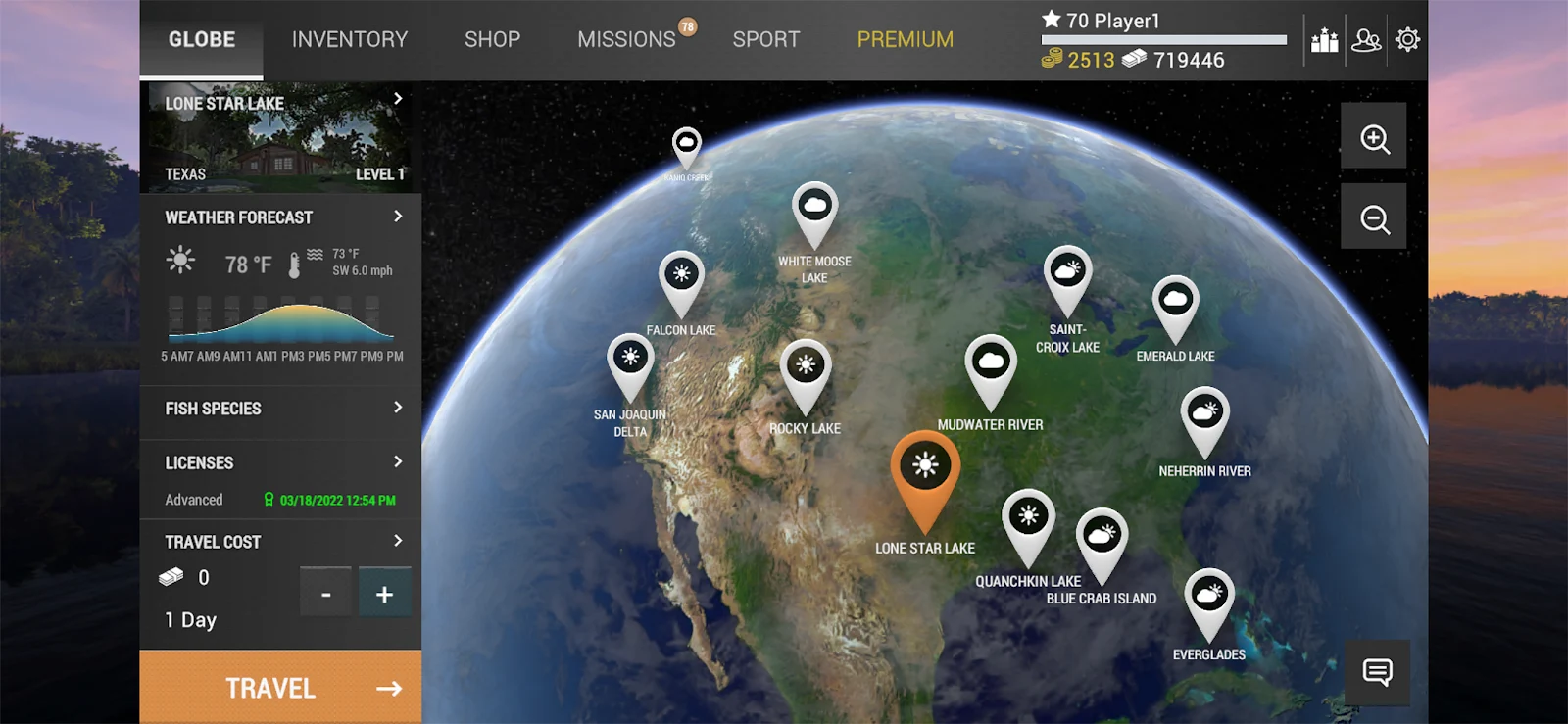
Look around before deciding
Before your first cast, look around the accessible bank. Find landmarks you can recognise after moving: a bend in the shoreline, a jetty or a patch of reeds. Do not treat every attractive corner as a promise of fish. For a beginner, a spot should first be understandable: where you stand, where you cast and what you intend to compare.
Ask a small question
Instead of searching for the best spot, define a check. Is the tackle easier to observe from this position? Can you repeat the direction without moving? That way you assess your own actions rather than assign a property to the whole waterway after one result. Check current in-game information for conditions, available species and restrictions.
Give comparison a chance
Choose two accessible areas and keep the other settings familiar. Note their visible differences and what felt easier to control. Avoid judging the entire location from a short period. An exploratory walk can be useful even if all you learn is how to find your way around.
Build your own memory map
After the session, describe the route to your spot in two sentences. Secret coordinates are not necessary: recognisable details are enough. Returning will take less attention next time, leaving more for your tackle. A short personal note can be more useful than another player's location when their equipment and goals differ from yours.